
QR table ordering
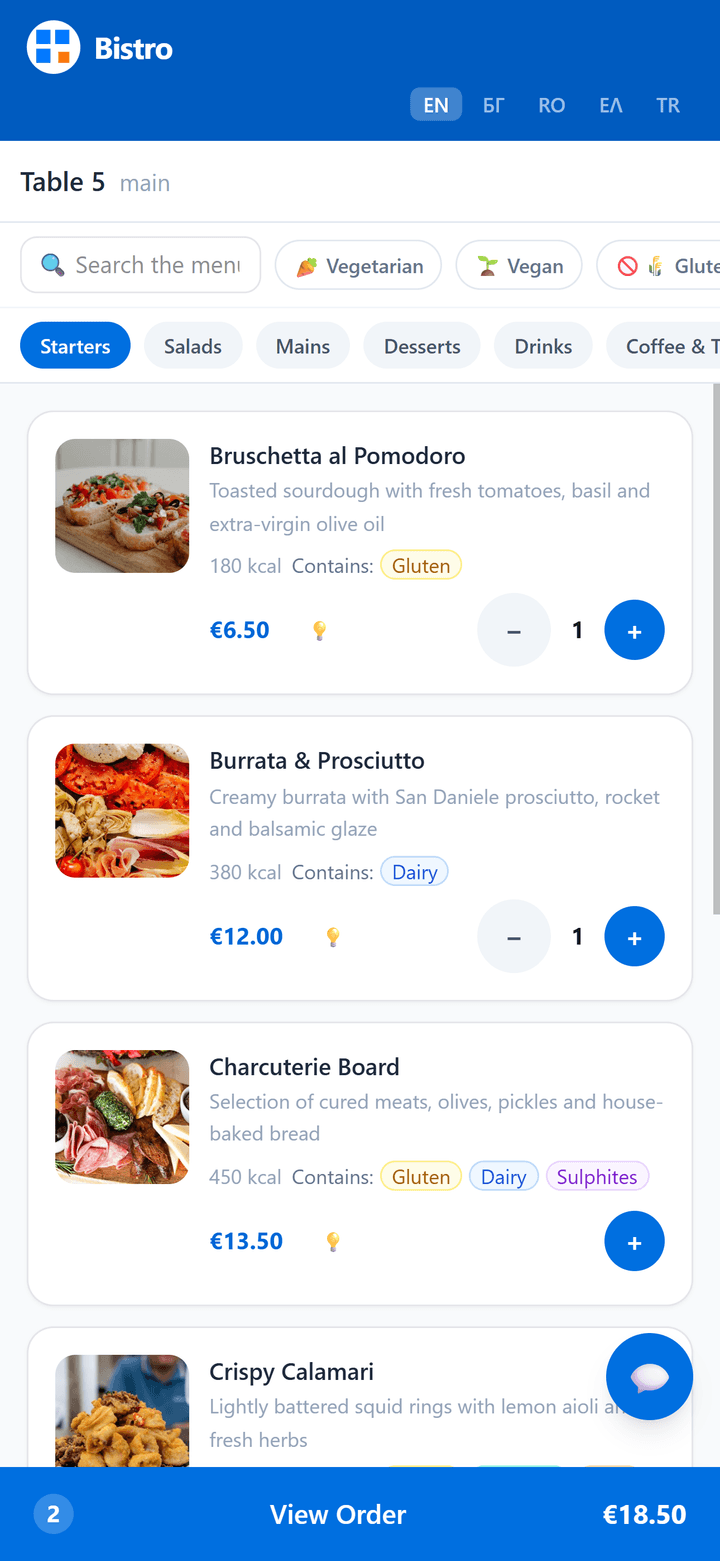
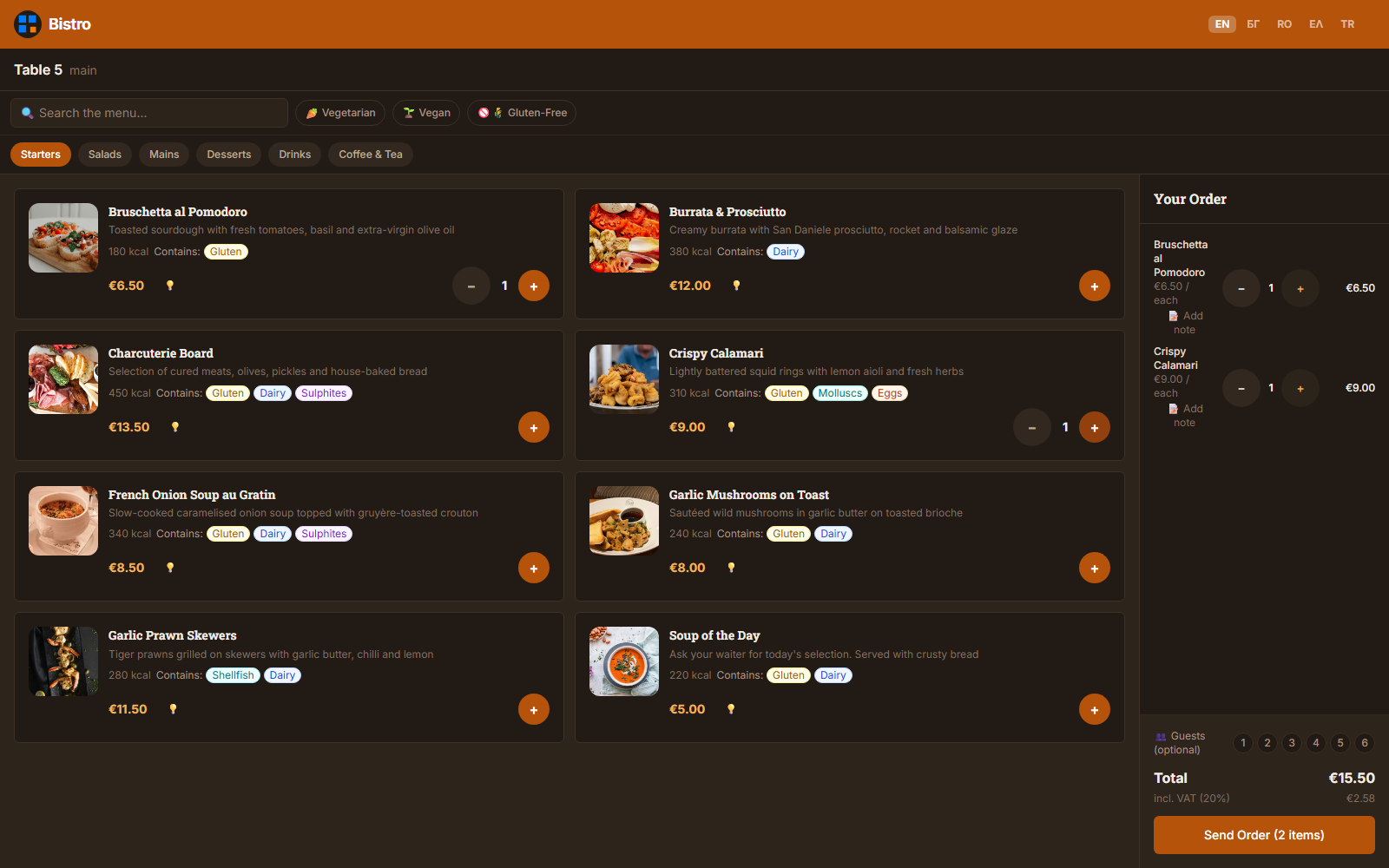
Every table gets a printable QR code. Guests scan, browse the menu and order straight from their own phone — no app, no waiting for a waiter to be free.
Restaurant management, reinvented
Guests scan a QR code and order from their phone. The kitchen and bar see it the instant it's placed. Waiters, store managers and admins stay in sync. Get paid per round, on an open tab, or on a running tab the waiter collects — and your data exports in one click, no lock-in.
Features
Every table gets a printable QR code. Guests scan, browse the menu and order straight from their own phone — no app, no waiting for a waiter to be free.
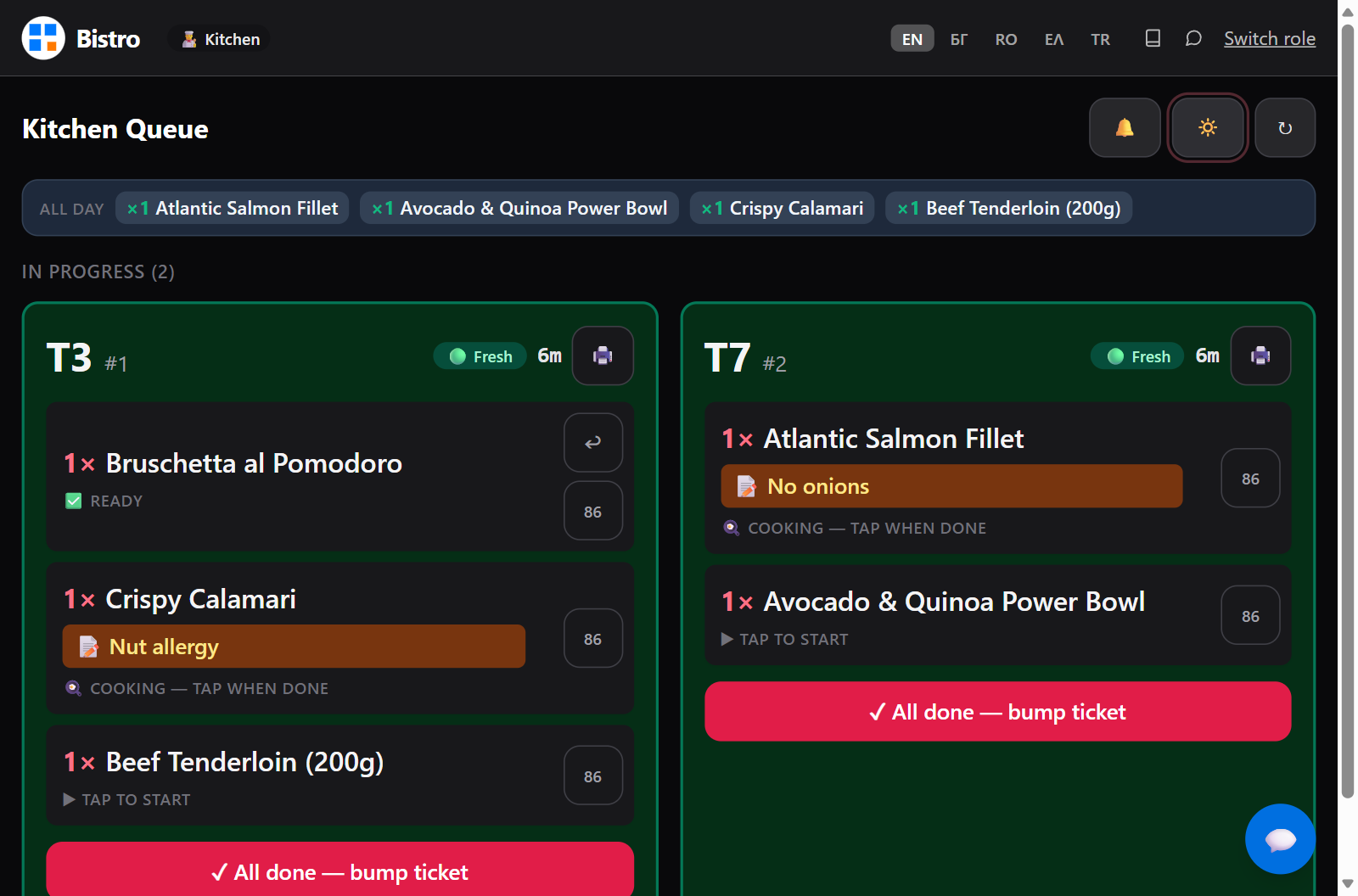
New orders land on the kitchen and bar screens instantly, with a chime and colour-coding by age. Tap a line to move it on, bump the whole ticket in one tap, and guest notes like allergies stand out in a highlighted strip — on a dark, full-width display mode made for the pass.
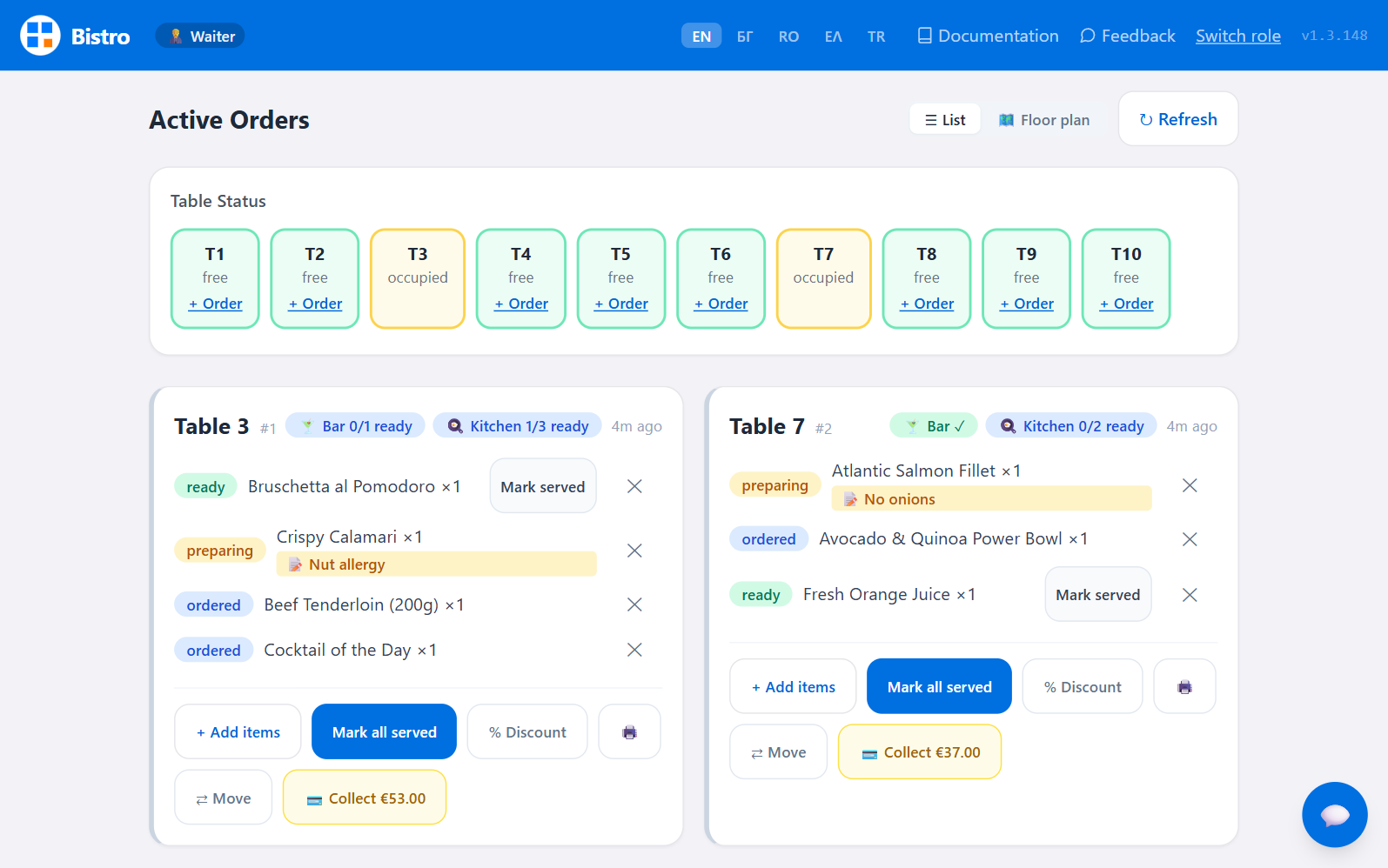
Every table at a glance, the ones that need you first. Take an order yourself with “+ Order” on a free table, move an order when guests change seats, add dishes with a search and a note for the kitchen, and get notified the moment a table asks for the bill.
Pay in full, split a table's bill across guests, or mix cash and card — with tips tracked per payment. The order closes automatically once it's covered.
English, Bulgarian, Romanian, Greek and Turkish, out of the box — dish names, descriptions and allergens included. Guests order in their own language, and only that language is downloaded, so the menu opens fast even on a weak signal.
Order history, revenue and daily reports are ready the moment you need them — plus week and month views compared to the previous period, and a balanced journal export for Business Central at close.
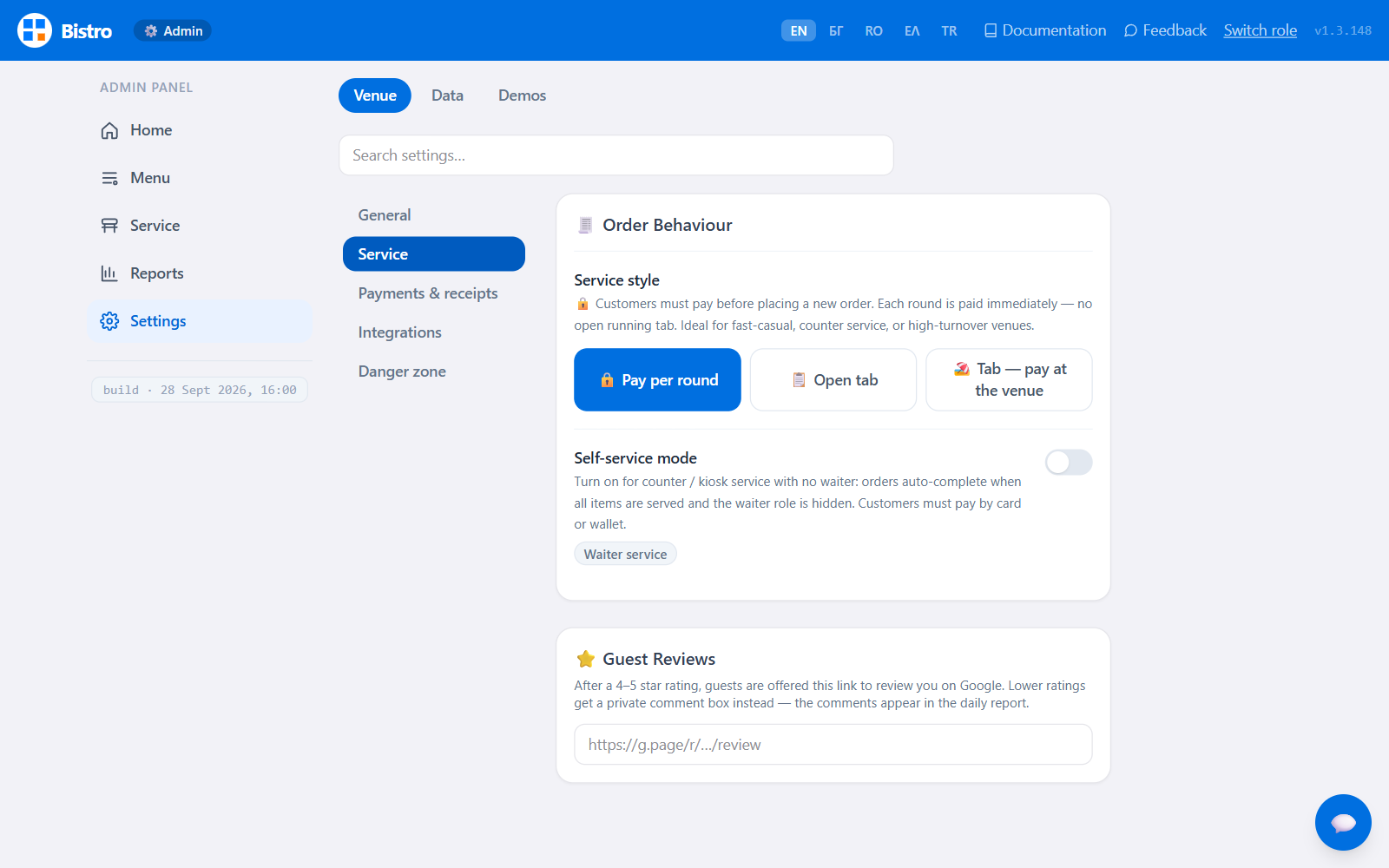
Pay per round, an open tab settled in the app, or a running tab the waiter collects — made for beach bars, pools and events. Guests settle what they've ordered so far as often as they like, the tab stays open, and you close it at the end.
One click exports everything: a .zip with a CSV per entity, the full JSON, your logo and a README — plus an Excel workbook, JSON and nightly backups you can download any time. No lock-in.
A 💬 button on every staff screen files bugs and wishes with screenshots, straight from the floor. The FlashOrder team answers in the thread.
Photograph the printed menu or drop its PDF — the assistant reads categories, dishes and prices into a draft you correct, then everything is created in one step. Descriptions, four translations and allergen flags can be written for you, dish by dish.
Staff ask about today's sales, look up a dish or mark it sold out straight from the chat. Every evening a short written digest of the day lands in your inbox, unusual voids, discounts or slow tables are flagged under “Worth a look”, and guests see what goes well with each dish.
Each finished day goes to your Rabosh company as one sales document with a receipt per payment method — posted at once or left as a draft for your accountant, by hand or automatically every night. Sending a day twice never books it twice.
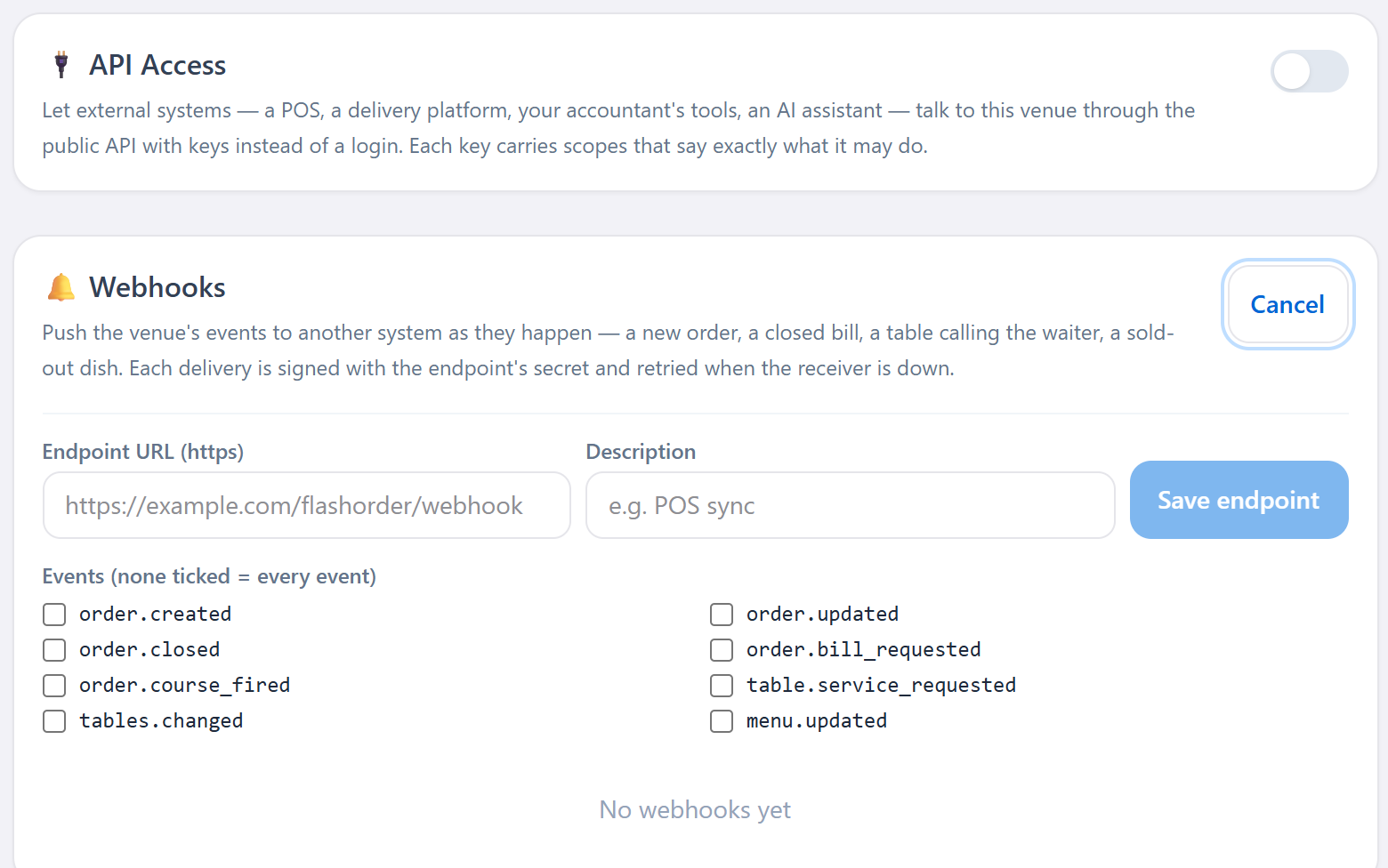
A versioned public REST API (/api/v1, with an OpenAPI reference) lets a POS, a delivery platform or your accountant's tools read the menu and orders, create orders and record payments. Keys carry scopes and an expiry, signed webhooks push order, table and menu events as they happen, and Claude can work with your venue through its MCP endpoint.
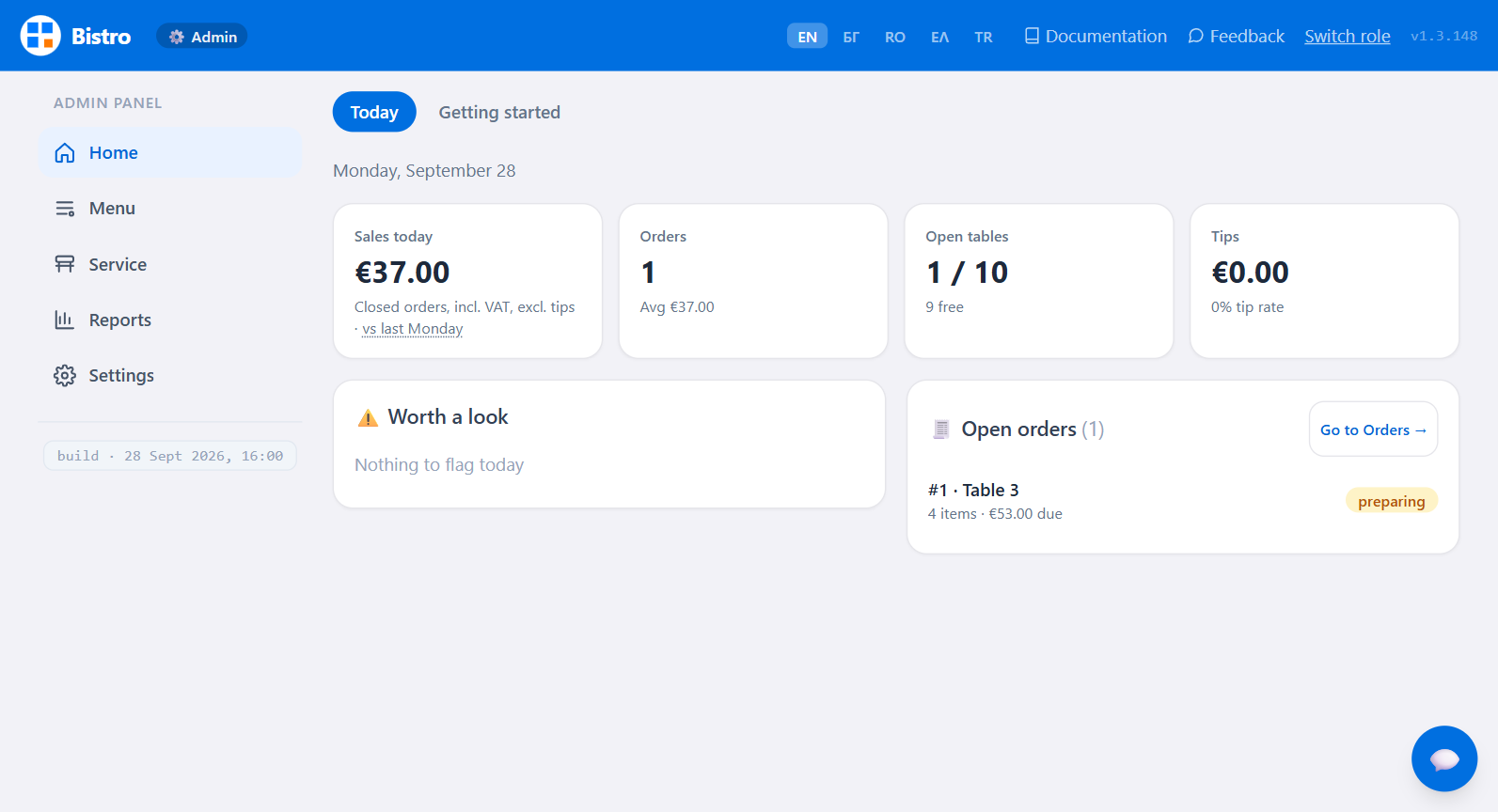
Five sections — Home, Menu, Service, Reports, Settings — with a sidebar on desktop and a bottom bar on phones. Home shows today's sales, orders, open tables and tips as they happen, and after every update a short “What's new” note tells you what changed.
The menu opens fast on a mobile signal, the cart survives a reload or an accidental swipe back, and the payment screen lists exactly what is being paid for — with the dish names on the bill in the guest's own language.
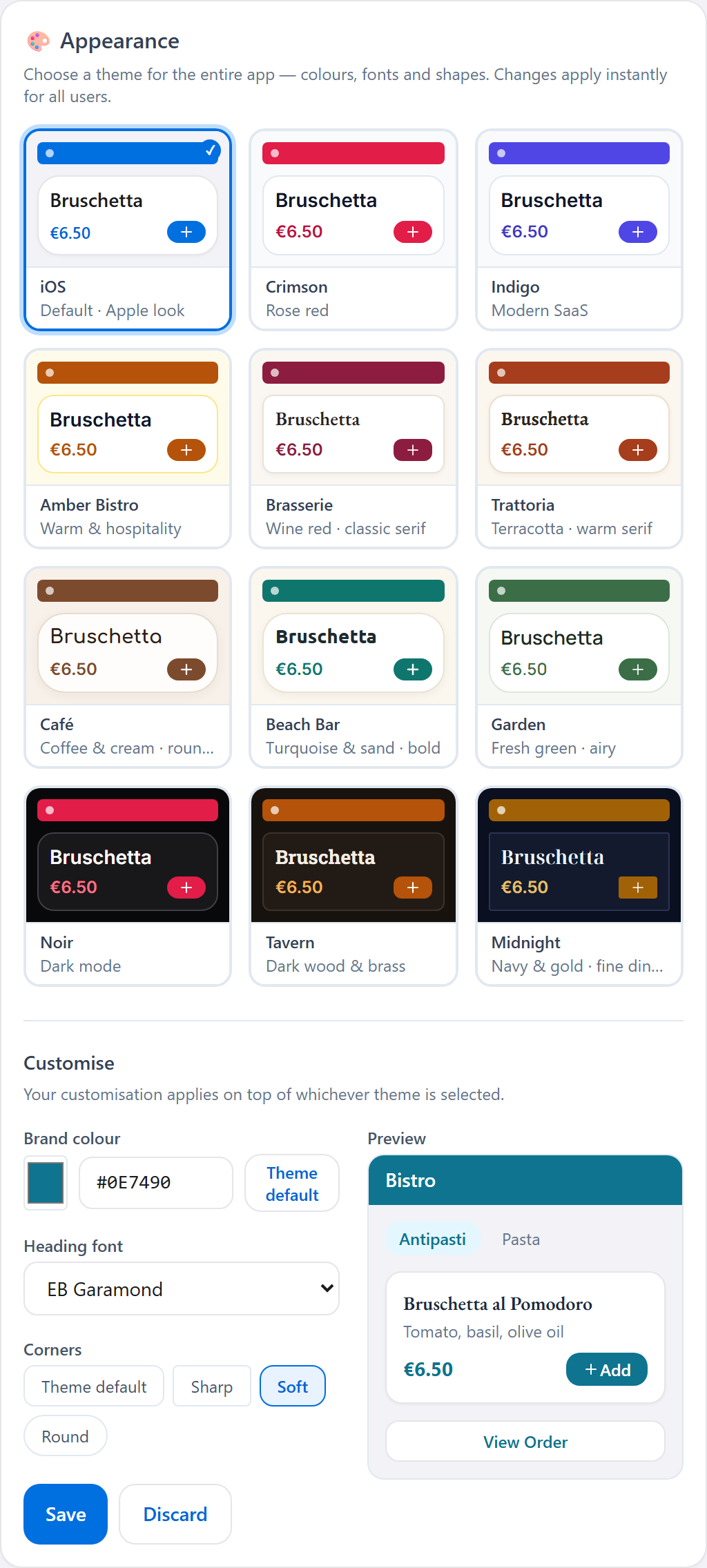
Twelve ready-made themes, from a classic brasserie to a dark tavern, each with its own colours, fonts and shapes. Put your own brand colour, heading font and corner style on top and see the guest menu before you save. FlashOrder keeps every button readable, whatever colour you pick.
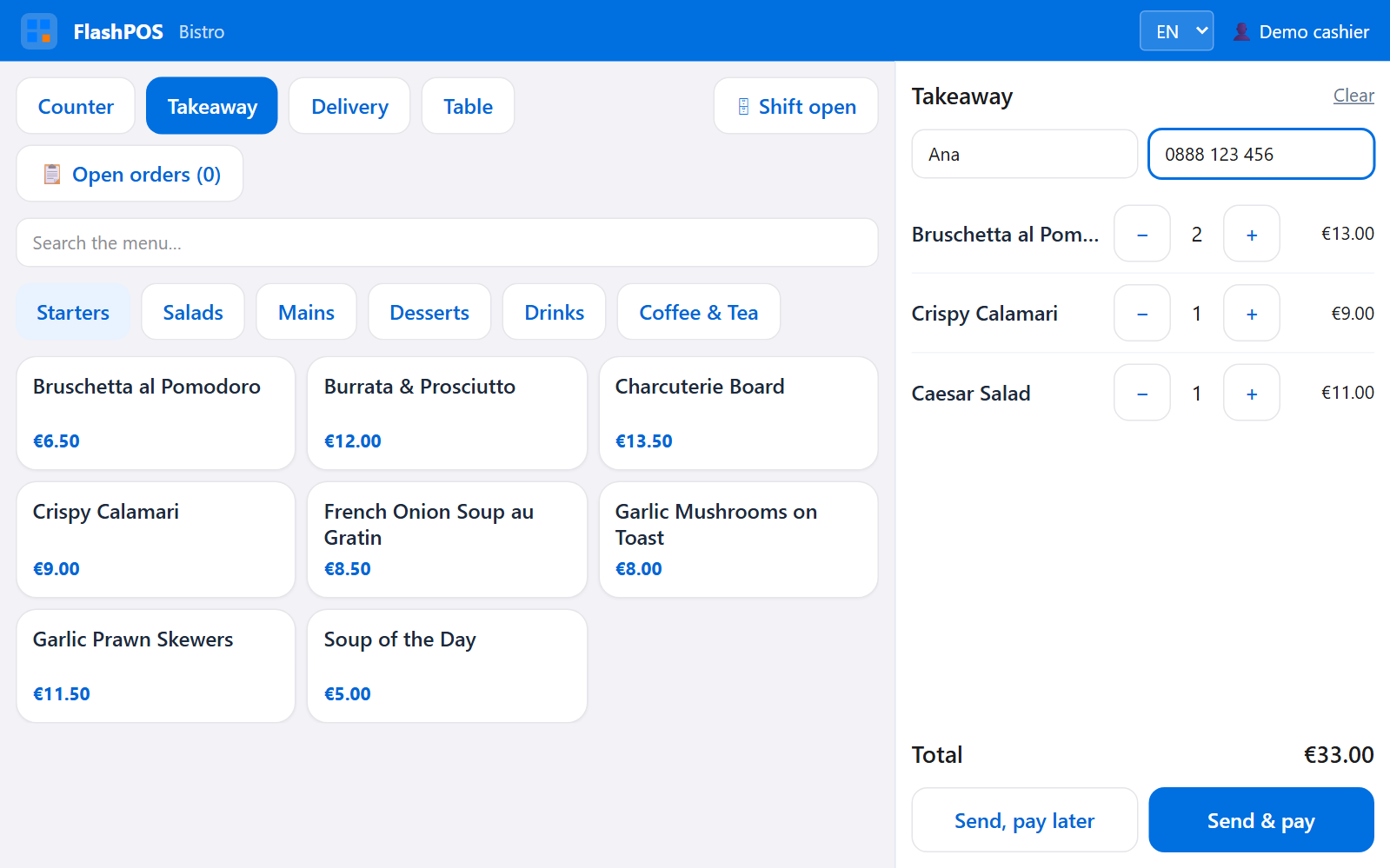
Ring up counter, takeaway, delivery and table orders on a touch screen. Staff sign in with their own PIN on tills an admin has set up, cash shows the change, and card payments go through your own terminal. Fiscal receipts keep coming from your fiscal device.
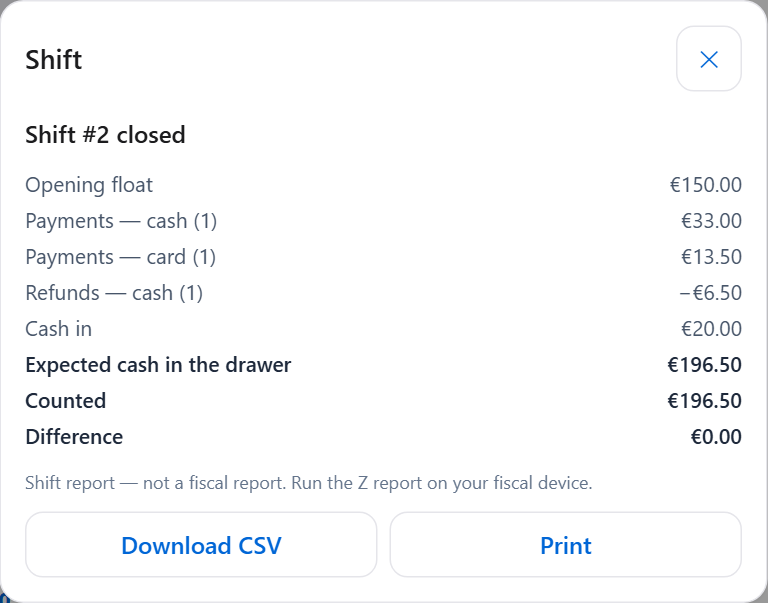
Give money back on a paid order, dish by dish and priced exactly like the bill, with a manager’s PIN when a waiter asks. Open each shift with the float, record cash in and out, and count the drawer at the end: the till shows what should be there and the difference. Cash a guest chooses to pay at the table counts only once the waiter has collected it. Two tables that want one bill are merged in a tap.
One system, six roles
Scan the table's QR code and read the menu in their own language, allergens included — search it, filter by vegetarian, vegan or gluten-free, add a note to a dish. The cart survives a reload; then they pay in full or share the bill link so everyone pays their share from their own phone.
A live board of every table, sorted by what needs attention — a guest calling, a bill requested, food ready at the pass. Take an order at a free table, move it to another table, add items with a note for the kitchen, and collect payment — including partial payments on a split bill.
Incoming tickets appear the second an order is sent, with a chime — also when a waiter adds lines. Tap a line to move it from start to done, bump the whole ticket in one tap, and switch to a dark, full-width display mode that reads from across the kitchen.
Its own queue of drink tickets, separate from the kitchen, so bartenders only see what's theirs to prepare — and move each drink on with a single tap.
Daily reports, order history and revenue data without needing full admin access — the numbers a shift lead actually needs, at a glance.
Five sections — Home, Menu, Service, Reports, Settings. Today's figures and the “Worth a look” alerts on Home, the Getting started checklist, tables and QR codes, the menu with its translations and photos, staff, data, API access and the accounting link — and a short “What's new” note after every update.
In the app
How it works
Every table has its own QR code. Guests scan it on their own phone and land straight on that table's menu.
They browse, add items to the cart and submit — in whichever of the 5 languages they're most comfortable in.
Tickets appear instantly on the right screen. Items move from ordered → preparing → ready, visible to the waiter in real time.
The waiter marks items served and requests the bill. Guests pay in full or split it, cash or card — the table frees up automatically.
Your venue, your data
FlashOrder deploys to your own server or hosting account. Orders, menus and reports live in your database, with automatic rotating backups — not on a third-party platform holding your customer data hostage.
Self-service demo
Get a private FlashOrder instance with an empty menu — add your own dishes, print real QR codes, take test orders. Free, no sign-up beyond this form.
FAQ
No. FlashOrder runs entirely in the browser. Guests scan a QR code and order — nothing to download, nothing to sign up for.
English, Bulgarian, Romanian, Greek and Turkish are built in — dish names, descriptions and allergens included. Guests switch languages themselves from the menu screen.
On your own hosting, under your own domain. FlashOrder doesn't hold your orders or customer data on a shared third-party platform.
Yes — daily reports export as a balanced journal in CSV or JSON, ready to import into Business Central or hand to your accountant. Rabosh users can post each finished day directly (see below).
Most venues are live the same day: the Getting started checklist walks you through name and logo, service style, menu, tables and QR codes — and you're taking orders.
Your demo stays up as long as you use it, and is automatically deleted after 14 days without activity. It's a sandbox — don't run a real venue on it.
Yes. Choose the service style per venue: pay per round, an open tab paid in the app at the end, or a running tab the waiter collects in cash or by card terminal. In tab mode guests can settle what they've ordered so far whenever they like — the tab stays open until you close it.
Yes. Admin → Data exports everything in one click as a .zip (a CSV per entity, the full JSON, your logo and a README), as an Excel workbook or as JSON — and the nightly backups can be downloaded at any time. There is no lock-in.
Yes, to Rabosh: each finished day is posted as one sales document with a receipt per payment method — immediately, or as a draft your accountant reviews — by hand from Reports or automatically at 05:00. Sending a day again is safe; it is never booked twice. For anything else, use the Excel, CSV and JSON exports or the public API and webhooks.
Photograph it or drop its PDF: the assistant reads categories, dishes and prices into a draft you check, and everything is created in one step. You can also import a CSV, start from a sample menu for your cuisine, or move a whole menu between venues as a menu pack.
Yes. A versioned public REST API (/api/v1, reference at /api/v1/openapi.json) reads the menu, tables and orders, creates orders, records payments and pulls reports. Keys are read-only unless you grant more scopes, can expire and can be rotated. Webhooks push order, table and menu events to your URL, signed and retried for up to six hours. Claude can also work with the venue directly through its MCP endpoint.
Yes. Upload your logo, pick one of twelve themes under Settings → Venue → Appearance, then add your brand colour, a heading font and a corner style on top, with a live preview of the guest menu. A colour too pale for white button text is deepened just enough to stay readable. A new demo even starts in a theme that suits the restaurant type you choose.
Yes. FlashPOS, the till for the counter, is part of FlashOrder and is switched on per venue. It takes counter, takeaway, delivery and table orders, cash and card payments, refunds and the end-of-shift cash count, on any PC or tablet with a browser. It does not print fiscal receipts: they keep coming from your fiscal device, and card payments go through your own terminal. Try it in the live demo at demo.flashorder.me/pos.
Tell us a bit about your venue and we'll help you get set up.